
How Padel Courts Are Built: 2026 Step-by-Step Guide
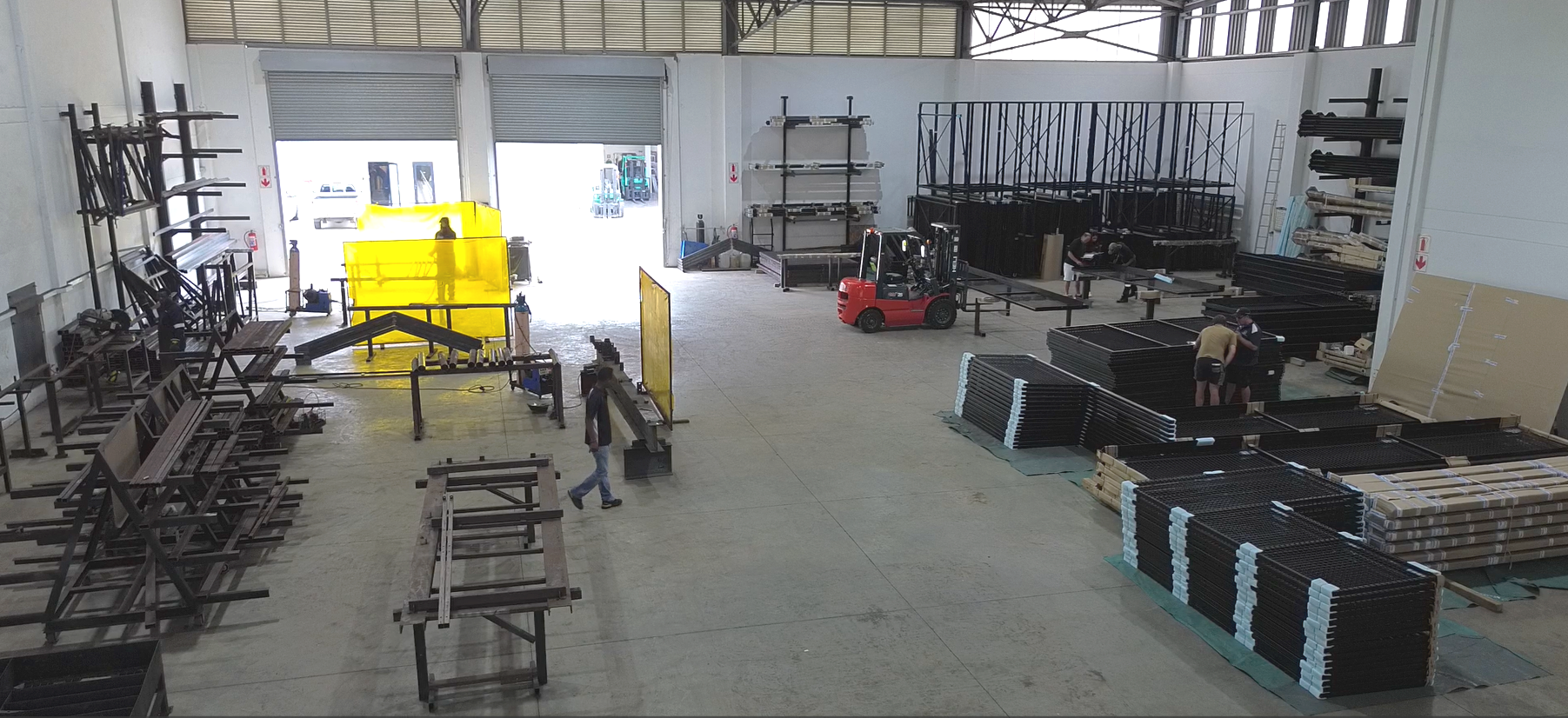
PadelNation’s local factory in Shaka’s Rock, Ballito.
Building a professional padel court is a precise manufacturing process that combines engineering, durability, and attention to detail. At PadelNation, every padel court we produce is designed to meet international standards while withstanding long-term outdoor and indoor use.
In this article, we break down how a padel court is built in South Africa, step by step, from raw materials to a fully packaged court ready for installation.
1. Receiving Raw Materials for Padel Court Manufacturing
The padel court manufacturing process begins with the delivery of all raw materials and components to our facility. This includes high-grade steel sections, mesh panels, and connection components required for a complete padel court structure.
Every material is checked on arrival to ensure it meets our quality and specification standards before fabrication begins.
2. Precision Cutting and Drilling of Steel Components
Once materials are approved, steel sections are cut to precise lengths using industrial-grade machinery. Accurate measurements are critical in padel court construction, as even small deviations can affect alignment, glass fitting, and overall court stability.
Drilling is completed at this stage to prepare each component for seamless assembly later in the process.
3. Assembling the Padel Court Steel Structure
After cutting and drilling, the padel court frame components are carefully aligned and assembled. This step ensures that all panels, posts, and connection points fit together perfectly.
Correct alignment at this stage is essential for:
Structural integrity
Proper glass and mesh installation
Long-term safety and durability
4. Welding, Grinding and Polishing for Strength and Finish
All joints are fully welded to create a strong, rigid padel court structure. Once welding is complete, each weld is professionally ground and polished.
This process:
Improves structural strength
Removes sharp edges
Creates a clean, seamless finish
Quality welding is one of the most important factors in the lifespan of a padel court.
5. Installing Heavy-Duty Mesh Panels
Strong steel mesh panels are securely attached to the frames to form the side and back walls of the padel court. These mesh panels are designed to handle:
High-impact ball contact
Player movement and pressure
Outdoor weather conditions
Correct mesh installation ensures safe and consistent play.
6. Final Steel Cleaning and Surface Preparation
Before protective treatments are applied, the entire steel structure undergoes a final round of grinding and polishing. This step removes any remaining imperfections and prepares the surface for galvanising.
Proper surface preparation is essential for ensuring long-lasting corrosion protection.
7. Hot-Dip Galvanising for Corrosion Protection
All steel frames are sent for hot-dip galvanising, one of the most effective methods of protecting steel from rust and corrosion. This process coats the steel in zinc, making it ideal for both indoor and outdoor padel courts.
Galvanising significantly extends the lifespan of a padel court, especially in coastal or high-humidity environments.
8. Powder Coating for Durability and Premium Finish
After galvanising, the frames are powder coated. Powder coating adds an extra layer of protection while also giving the padel court a clean, professional appearance.
Benefits of powder coating include:
Increased durability
UV resistance
Custom colour options
9. Quality Control and Delivery Back to PadelNation
Once coating is complete, the padel court frames are delivered back to PadelNation for final inspection. Every component is checked for:
Finish quality
Structural accuracy
Compliance with design standards
Only once everything meets our requirements does the court move to packaging.
10. Protective Wrapping and Secure Packaging
Each part of the padel court is carefully wrapped and packaged to prevent damage during transport. Glass contact points, edges, and connection areas receive additional protection.
Proper packaging ensures the court arrives at the installation site in perfect condition.
11. Storage or Delivery to Installation Site
Completed padel court kits are either stored safely in our facility or delivered directly to the client’s installation site. This streamlined process allows for efficient installation and minimal delays.
Whether the court is destined for a private club, commercial facility, or residential project, it arrives ready for professional installation.
Why Professional Padel Court Manufacturing Matters
A high-quality padel court is the result of precision engineering, durable materials, and strict quality control. By following a proven step-by-step manufacturing process, we ensure every court delivers:
Long-term durability
Player safety
Professional playing conditions
If you’re considering building a padel court, choosing an experienced padel court manufacturer makes all the difference.